New York City Scavenger Hunt
Discover The Energy, Connect Your Team
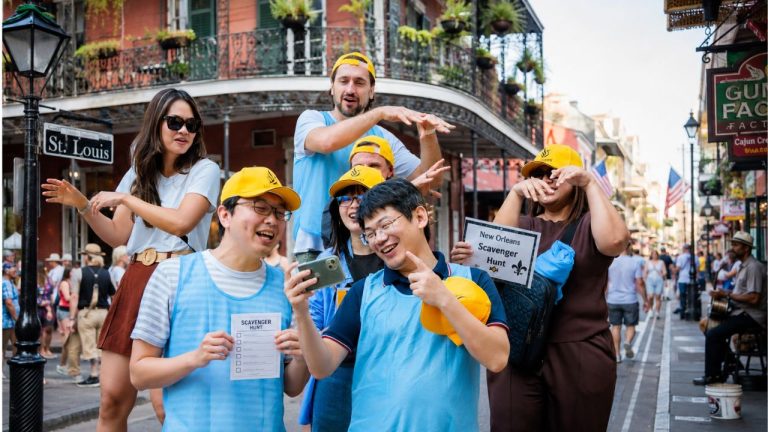
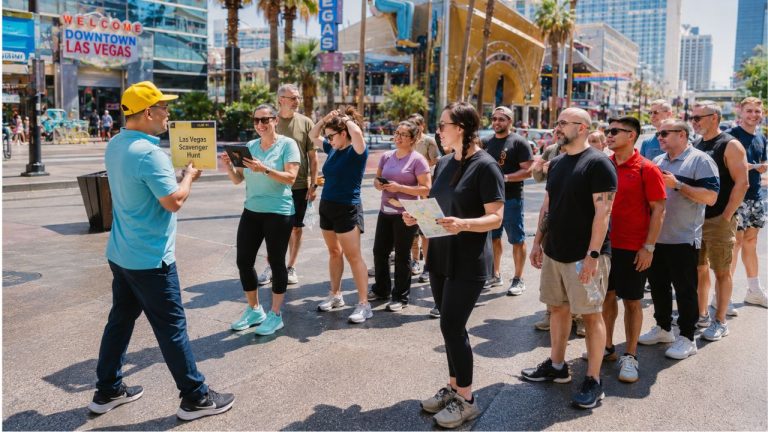
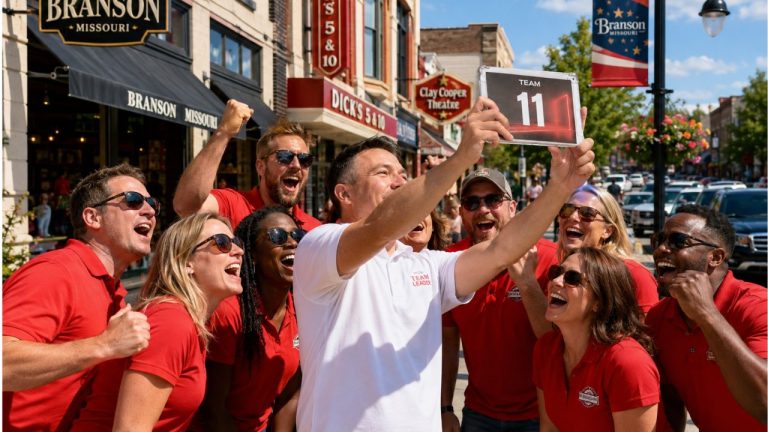
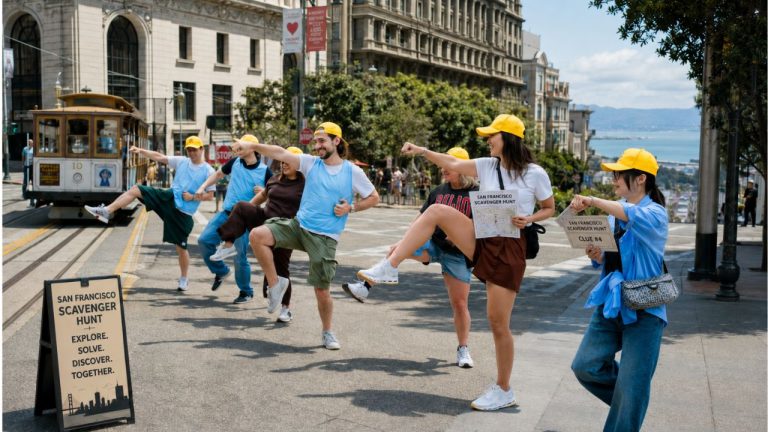
Transform New York City into an interactive team adventure filled with iconic landmarks, urban discovery, creative missions, strategic challenges and friendly competition.
Duration: 90 to 150 minutes
Group Size: 20 to 500 participants
Recommended Team Size: 5 to 8 participants
Format: Competitive and collaborative
Location: Midtown Manhattan, Lower Manhattan or another selected walkable district
Best For: Corporate meetings, conferences, company retreats and incentive groups
1. Overview
Experience New York City Through Teamwork
New York City Scavenger Hunt is an interactive outdoor team building experience designed to help corporate groups explore the city, strengthen communication and create meaningful team connections.
Participants work in small teams and follow a specially designed walking route through one selected area of Manhattan.
Depending on the group’s hotel, meeting venue and event objectives, the program may be organized around Times Square, Bryant Park, Grand Central Terminal, Lower Manhattan or another suitable walkable district.
Each experience focuses on one compact area rather than attempting to connect distant New York neighborhoods within the same route. This gives participants more time to complete challenges, observe their surroundings and interact with teammates.
A Midtown Manhattan experience may combine the visual energy of Times Square with the architecture, public spaces and local stories found around Bryant Park and Grand Central Terminal. Times Square is one of New York City’s most recognizable entertainment districts, while Bryant Park serves as an active public space between Fifth and Sixth Avenues. Grand Central combines transportation, architecture, history, shopping and dining within one landmark destination.
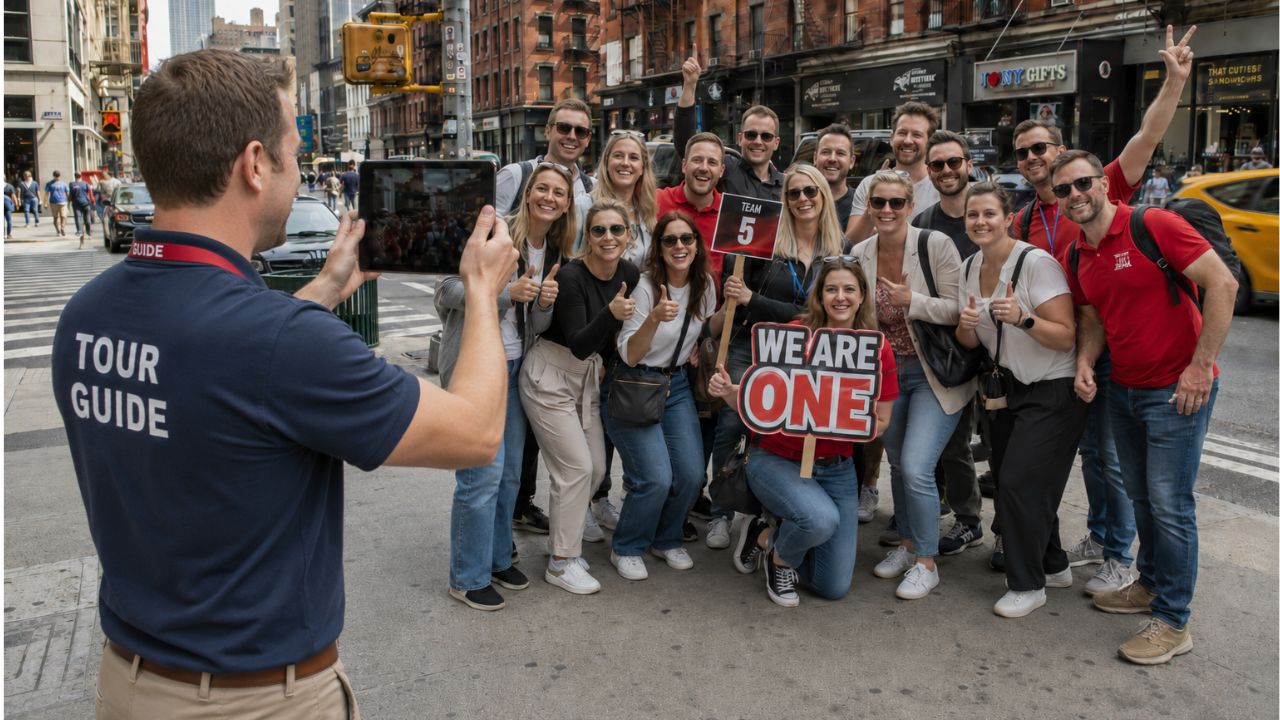
Along the route, teams answer local discovery questions, complete creative photo missions, record short videos, solve puzzles and take part in customized challenges connected to the company or event theme.
The program combines urban exploration, teamwork, creativity and friendly competition in one high-energy experience.
Participants do not simply walk past famous landmarks. They observe details, exchange ideas, make decisions and create their own team story within New York City.
New York City Scavenger Hunt can be organized as a standalone team building activity, a conference breakout session, a leadership meeting experience, an incentive travel program or an interactive activity before dinner.
Every program can be customized around the group size, meeting venue, available time, company culture and business objectives.
2. How It Works
An Urban Journey From Team Formation To Final Celebration
Form The Teams
Participants are divided into small teams of approximately five to eight people.
Each team creates a name, agrees on responsibilities and completes a short activation mission before beginning the main experience.
This opening moment helps participants connect quickly, establish positive energy and prepare for the challenges ahead.
Receive The Program Briefing
The facilitator introduces the experience and explains the program objective, scoring system, mobile team building platform, route boundaries, safety requirements and final meeting point.
Teams learn how to access missions, submit answers, upload photographs, record videos and monitor their progress throughout the activity.
The briefing also emphasizes pedestrian safety, respect for public spaces and the importance of remaining within the designated program area.
Explore New York City
Teams follow a carefully planned walking route through one selected district.
A Midtown Manhattan route may begin near Times Square and continue toward Bryant Park, Grand Central Terminal or another agreed meeting point.
A Lower Manhattan route may focus on selected areas around the Financial District, Battery Park or nearby public spaces.
The final route is determined by the group’s hotel, conference venue, program duration and preferred style of experience.
Times Square regularly receives significant pedestrian traffic, so route design, starting procedures and team movement must be carefully coordinated. Outdoor events within certain Times Square pedestrian plazas may also require permits or advance approval.
The program is adapted according to group size, weather, pedestrian conditions, accessibility requirements, public events and available time.
For larger groups, teams may begin from different points or follow slightly varied routes to create a smoother and more comfortable experience.
Complete The Challenges
Throughout the route, teams receive interactive missions designed to activate different strengths.
Local Discovery Challenges
Participants observe buildings, street signs, public art, architectural details and unusual city features to identify the correct answers.
The information required to complete each mission must be discovered at the location rather than obtained through a simple online search.
These challenges encourage teams to slow down, observe carefully and experience New York City beyond its most obvious attractions.
Architecture And Landmark Challenges
New York’s buildings, public spaces and transportation landmarks become part of the team experience.
Participants may be asked to identify design details, compare architectural styles or connect visual information discovered at several locations.
At Grand Central Terminal, challenges may draw inspiration from its historic halls, Main Concourse, famous clock and distinctive architectural features.
The purpose is not simply to photograph a landmark. Teams must investigate their surroundings, exchange observations and determine which details are important.
These missions strengthen attention to detail, curiosity and collaborative investigation.
Broadway Story Challenges
A Midtown route can use the entertainment identity of Times Square and Broadway as inspiration for creative storytelling.
Teams may be asked to develop a title for an imaginary production, create a short scene or transform a destination clue into a theatrical story.
Participants do not need acting experience. The objective is to encourage them to share ideas, experiment and create something together.
Photo Challenges
Teams recreate scenes, complete creative poses and capture memorable photographs at selected locations.
Some missions may use digital displays, city architecture, public spaces or the New York skyline as visual inspiration. Others can incorporate the company’s identity, values or event theme.
The resulting photographs can later be included in a closing presentation, internal event recap or company communication.
Video Challenges
Participants record short performances, destination introductions, team messages or creative advertisements.
A team may be asked to produce a New York news report, create a short Broadway-style trailer or communicate a company message through an entertaining video.
These missions encourage confidence, creativity and participation from the entire team.
Puzzles And Codes
Teams solve riddles, decode messages and combine information collected at different points along the route.
A number found on one building may become part of a code, while a symbol discovered later may reveal the final answer.
These activities strengthen logical thinking, information sharing and collaborative problem solving.
New York City Trivia
Participants answer questions connected to the selected district, architecture, entertainment, transportation, public spaces and local identity.
The difficulty level can be adapted for first-time visitors, international participants or groups already familiar with New York City.
The purpose is not simply to test knowledge. It is to help participants discover interesting details that they might otherwise overlook.
Company Challenges
Customized missions can incorporate company values, product knowledge, conference messages, leadership themes, customer priorities or organizational culture.
A sales conference may include product and customer challenges. A leadership meeting may focus on communication, responsibility and decision making. An incentive group may prefer more destination discovery, photography and creative performance.
This allows the experience to support business objectives without losing its energetic, social and entertaining character.
Follow The Live Scoring
Teams earn points based on accuracy, creativity, participation, speed and successful completion of missions.
Live scoring creates excitement and friendly competition while encouraging participants to remain focused throughout the experience.
Teams must decide whether to complete more missions quickly or invest additional time in creating stronger and more original responses.
Success depends not only on speed, but also on how effectively the group communicates, establishes priorities and uses the different strengths of its members.
Celebrate The Results
At the end of the route, participants return to the designated meeting point for the closing session.
The facilitator leads a short recap, announces the results, recognizes memorable performances and presents an award to the winning team.
Selected photographs and videos can be shown during the closing session, company dinner or evening event.
This creates an entertaining conclusion and gives participants an opportunity to celebrate the experience they created together.
3. Business Benefits
More Than A City Adventure
New York City Scavenger Hunt is designed to deliver meaningful business benefits while giving participants an active and memorable way to experience the destination.
Improved Communication
Participants must share observations, explain ideas and agree on answers before submitting each mission.
The experience encourages clear communication, active listening and constructive discussion.
Teams quickly recognize how missing information, unclear instructions or unchecked assumptions can affect their performance.
The activity demonstrates how effective communication supports individual responsibilities and the wider team result.
Stronger Collaboration
Every participant can contribute through a different strength.
Some team members may lead navigation, while others focus on observation, creativity, photography, logical thinking, organization or time management.
The experience gives individuals space to contribute naturally without requiring everyone to perform the same role.
Teams discover how strong performance develops when people combine their abilities, share responsibility and work toward a common objective.
Better Decision Making
Under the pressure of time, teams must quickly assess the situation, establish priorities and agree on a clear direction.
They decide which missions offer the greatest value, who should take responsibility, when to continue developing an idea and when to move forward.
Every choice affects the team’s score, progress and overall performance.
The experience develops prioritization, adaptability and confident decision making under pressure.
Creative Thinking
New York City provides a visually stimulating setting for photography, storytelling, video and performance missions.
Teams are encouraged to develop original ideas, present them confidently and approach each challenge from a fresh perspective.
Many missions do not have one fixed solution. Participants must interpret the objective, combine different viewpoints and create a response that represents the whole team.
Strategic Time Management
Teams have a limited timeframe and may not be able to complete every available mission.
They must balance speed with quality, determine how long to remain at each location and recognize when a challenge is consuming too many resources.
The activity demonstrates that effective time management is not simply about moving faster. It requires teams to identify the right priorities and use their available time with purpose.
Adaptability
New York’s fast-moving urban environment requires teams to remain aware and responsive.
Participants may need to modify their route, redistribute responsibilities or change their approach when an original plan is no longer effective.
The experience strengthens the ability to reassess available information, respond calmly and continue moving toward a shared objective.
Leadership In Action
The program creates natural opportunities for leadership to emerge.
Different participants may take the lead at different stages depending on the nature of the challenge.
One person may guide the team through the route, another may organize information and another may direct a photography, storytelling or video mission.
This demonstrates that effective leadership can be situational, shared and responsive to the needs of the group.
Confidence And Participation
Creative missions encourage participants to step outside their familiar workplace roles.
Someone who rarely speaks during meetings may lead a video challenge, while another participant may demonstrate an ability to organize the team in a busy environment.
The playful format helps individuals contribute more confidently, try new responsibilities and recognize strengths within their colleagues.
Employee Engagement
The active city environment allows participants to connect outside their normal workplace roles.
Movement, local discovery and friendly competition create positive energy, active participation and stronger personal connections.
The activity offers a refreshing contrast to a ballroom, conference room or traditional training session.
Destination Connection
Participants experience New York City actively rather than simply observing it from a tour vehicle, hotel or meeting room.
The program encourages teams to notice architecture, public art, local stories and details hidden within familiar city spaces.
Whether the route takes place in Midtown or Lower Manhattan, the destination becomes more than a background. It becomes an active part of the team building experience.
Company Message Integration
The challenges can be customized around leadership themes, company values, product information, conference content, employee recognition or organizational change.
Instead of receiving this information through a conventional presentation, participants interact with it as part of the activity.
Teams may discover company values through clues, communicate leadership messages through videos or connect city-inspired missions with the wider event theme.
This makes important business content more interactive, memorable and relevant.
Flexible Corporate Delivery
New York City Scavenger Hunt can be adapted for corporate meetings, conferences, leadership retreats, sales kickoffs, incentive travel groups, employee appreciation events and cross-functional team gatherings.
The route, duration, difficulty, physical activity and degree of customization can all be adjusted to suit the group profile.
The experience can be delivered as a focused 90-minute activity or expanded into a longer neighborhood discovery program.
The starting point and final meeting location can also be coordinated with the group’s hotel, conference venue, restaurant or evening event.
4. Testimonials
Sample Participant Feedback
“New York Created An Incredible Energy For Our Team”
“The combination of iconic locations, creative challenges and fast-paced decision making kept everyone engaged. We experienced the city in a completely different way.”
Michael Carter
Regional Sales Director
United States
“A Strong Addition To Our Conference Schedule”
“The program gave participants a refreshing change from the meeting room. The route was well structured, the instructions were clear and everyone found a way to contribute.”
Claire Dubois
Conference Program Manager
France
“The Perfect Balance Of Strategy And Creativity”
“Our group enjoyed deciding which challenges to prioritize while still creating strong photographs and videos. The experience required much more teamwork than we initially expected.”
Jonathan Lee
Operations Director
Singapore
“A Memorable Way To Connect A Global Team”
“Our colleagues came from different offices and several had never met in person. The scavenger hunt helped them communicate naturally and create shared memories in New York.”
Emily Watson
Human Resources Manager
United Kingdom